Can a business develop a PAYDEX score without its owner signing a personal guarantee?
It may be possible when suppliers extend trade credit to the business without a guarantee and report its payment activity to Dun & Bradstreet. However, no-personal-guarantee accounts are not available to every applicant, and opening an account does not ensure that a PAYDEX score will be generated.
It is also important to separate three different concepts: a personal guarantee, a personal credit check, and a request for an owner’s Social Security number. A creditor may request personal information for identity verification or underwriting without including a personal guarantee. The actual agreement determines whether the owner is personally liable.
What a PAYDEX Score Measures
The Dun & Bradstreet PAYDEX Score is a dollar-weighted indicator of a business’s past payment performance. It is based on payment experiences reported to D&B by suppliers and other business partners, rather than the owner’s mortgage, personal credit cards, income, or personal debt-to-income ratio.
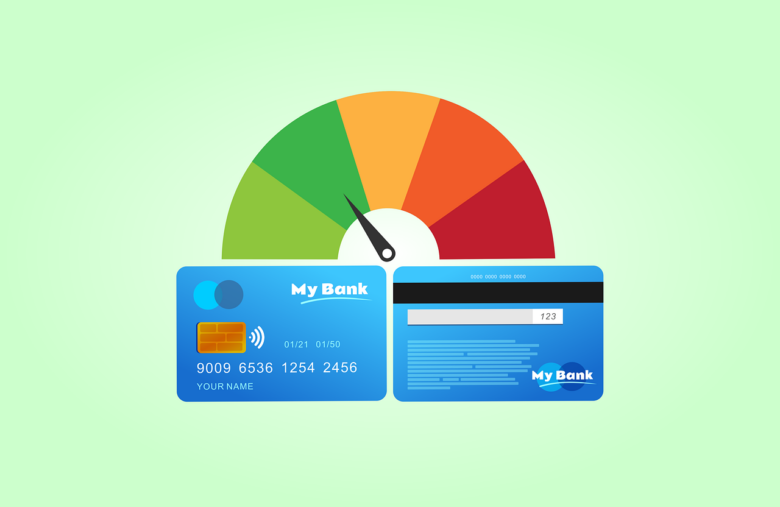
PAYDEX generally ranges from 1 to 100. According to D&B, a score of 80 reflects payment within agreed terms, while a score above 80 reflects payment earlier than terms. Larger reported payment experiences can have more influence because the calculation is dollar-weighted.
- PAYDEX measures reported business payments: Unreported invoices generally cannot contribute to the score.
- A personal guarantee concerns liability: It determines whether a creditor may pursue the guarantor when the business does not pay.
- A PAYDEX score is not an approval score: Creditors may consider cash flow, time in business, financial statements, collateral, personal credit and other information.
D&B needs multiple accepted payment experiences before it can calculate PAYDEX. Its public materials do not support assuming that one account—or any fixed list of newly opened accounts—will automatically produce a score. Reported or submitted trade information remains subject to D&B’s matching, verification and acceptance processes.
Steps to Build PAYDEX Payment History Without a Personal Guarantee
1. Check whether the business already has a D-U-N-S Number
A D-U-N-S Number is D&B’s unique business identifier. A business can request one from D&B at no charge, although optional expedited services may cost money. Check for an existing number before requesting another one.
Review the associated business record for the correct legal name, address, phone number, entity type and ownership information. D&B provides D-U-N-S Manager for eligible business owners and officers to request updates. Keeping applications consistent with the company’s legal records can also reduce identity-matching problems. See our discussion of business entity structure and commercial funding for related considerations.
2. Evaluate trade accounts individually
Net-30 vendor accounts allow an invoice to be paid within 30 days, but “net 30” does not necessarily mean that the account reports to D&B or is available without a personal guarantee.
Before applying, ask the supplier:
- Does the current application include a personal guarantee?
- Will personal credit be checked, and is that check hard or soft?
- Does the supplier report payment experiences to Dun & Bradstreet?
- Which business entity and D-U-N-S Number will receive the reporting?
- Are there membership fees, minimum purchases or other account costs?
Policies can change, so do not rely solely on an old online vendor list. Confirm the current terms with the supplier and retain a copy of the application and credit agreement.
3. Read the guarantee language before accepting the account
An application made with an EIN is not automatically a no-personal-guarantee application. Guarantee language may appear in the credit terms, electronic signature section or a separate document. If the language is unclear or the potential liability is significant, consider having a qualified attorney review it before signing.
4. Use trade credit for legitimate business purchases
Purchase products or services the business actually needs and can repay from operating cash flow. Opening accounts, paying membership charges or buying unnecessary merchandise solely to pursue a score can create costs without ensuring that usable payment history will appear.
5. Pay by the contractual due date
Paying within terms supports a prompt-payment record. Paying earlier may be reflected more favorably in PAYDEX, but there is no universal requirement to pay every invoice 10 or 15 days early. Prioritize accurate invoices, adequate cash reserves and reliable payment before the due date.
Set calendar reminders or automatic payments where appropriate, while still checking invoices for errors. A late payment can be more consequential than any possible benefit from trying to pay unusually early.
6. Monitor the D&B file
D&B’s current monitoring product is D&B Credit Insights. Features vary by free and paid tier; for example, free access may provide score ranges and alerts rather than every actual score.
Reporting does not necessarily appear immediately or on a predictable schedule. Keep invoices, account statements and payment confirmations, then review the business file periodically. If an account is missing, ask the supplier whether it reports that type of account and verify that it has the correct business identity. D&B does not guarantee that a submitted trade reference will be accepted or affect a score.
Common Mistakes to Avoid
- Assuming every net-30 account reports: Payment terms and credit reporting are separate features.
- Confusing an SSN request with a guarantee: Personal information may be requested without creating liability, while guarantee language may still appear in an EIN-based application.
- Using outdated vendor recommendations: Approval, guarantee and reporting policies can change without notice.
- Applying for too many accounts: Fees, unnecessary purchases and administrative work can outweigh any credit-building benefit.
- Letting business records conflict: Differences in legal names, addresses or entity details may interfere with account and payment matching.
- Expecting a fixed result: Neither a specific number of accounts nor a particular payment schedule guarantees a PAYDEX score or score increase.
- Treating PAYDEX as a financing approval: A creditor may not use PAYDEX at all, or may use it alongside business and personal underwriting information.
Will PAYDEX Eliminate Future Personal Guarantees?
No. Building business payment history may give a creditor more information about the company, but it does not require a supplier or lender to waive a personal guarantee. Requirements depend on the creditor, product, requested amount, business history, ownership and other underwriting factors.
Some programs require guarantees regardless of PAYDEX. For example, the U.S. Small Business Administration states that individuals owning 20% or more of an applicant generally must provide an unlimited personal guaranty for the SBA programs associated with SBA Form 148. Conventional lenders and vendors set their own requirements.
Summary
A business may build PAYDEX payment history without a personal guarantee by obtaining trade accounts that are genuinely issued without one, using the accounts responsibly and having payment experiences reported to D&B. Start by checking the D-U-N-S record, confirm each supplier’s current terms, read the agreement and pay within the stated terms.
Keep the objective in perspective: PAYDEX documents reported payment behavior. It does not guarantee financing, higher limits or the removal of personal liability from future credit products.
Sources and further reading
For key legal, regulatory, program, or credit-reporting details, ScoreRocks Finance prioritizes primary and official sources. Rules and product practices can change, so readers should verify current requirements.

The ScoreRocks Finance Editorial Team creates practical, carefully researched educational content about business credit, personal credit management, borrowing costs, and commercial funding. Our goal is to explain financial topics clearly, including important risks and questions readers should consider before making decisions. ScoreRocks Finance does not approve loans, repair credit, represent lenders, or provide individualized financial, legal, tax, or investment advice.